Direct vs Regular Mutual Funds: How 1% Can Change Your Retirement Plan Drastically

When you look at a mutual fund fact sheet, it’s easy to ignore the “Expense Ratio.” It is usually a small number – 1.8% or 0.7%. In the grand scheme of 12% or 15% returns, does a 1% difference really matter?

The short answer is: Yes.

The long answer is that this tiny 1% difference, when compounded over the lifespan of a retirement plan (20–30 years), can result in a difference of ₹50 Lakhs to ₹1 Crore in your final corpus.

Understanding the battle of Direct vs Regular mutual funds is one of the most critical decisions you will make as an investor. Here is the math, the logic, and the decision-making framework you need.

What is the Difference?

Before we get to the shocking numbers, let’s clarify what these terms mean.

Regular Mutual Funds

When you invest through an MF distributor, bank, or financial advisor, you are investing in a “Regular Plan.”

  • Cost: The fund house pays a commission to the distributor for guiding you. This cost is recovered from your investment.
  • Expense Ratio: Higher (e.g., 2.0%).

Direct Mutual Funds

When you invest directly with the Fund House (AMC) or through zero-commission platforms, you are investing in a “Direct Plan.”

  • Cost: No middleman commissions are paid.
  • Expense Ratio: Lower (e.g., 1.0%).

Note: Both plans invest in the exact same stocks and bonds. The portfolio is identical. The only difference is the fee deducted from your Net Asset Value (NAV).

The Math: How 1% Eats Your Retirement

Most investors understand simple interest, but they underestimate the impact of costs on Compound Interest.

Let’s assume two friends, Rahul and Amit, both start an SIP of ₹25,000/month for their retirement (30 years).

  • Rahul invests in a Regular Plan (Returns: 11% post-fees).
  • Amit invests in a Direct Plan (Returns: 12% post-fees).

Note: The 1% difference represents the commission/expense ratio gap.

DurationRahul (Regular Plan @ 11%)Amit (Direct Plan @ 12%)The “Loss” (Difference)
10 Years₹53.6 Lakhs₹56.5 Lakhs₹2.9 Lakhs
20 Years₹1.97 Crores₹2.30 Crores₹33 Lakhs
30 Years₹5.80 Crores₹7.65 Crores₹1.85 Crores

The Verdict?

Over 30 years, that “small” 1% fee cost Rahul ₹1.85 Crores. That is enough to buy a retirement home or fund a child’s education entirely. This is why Mutual fund management costs are a crucial factor in long-term wealth planning.

So, Should Everyone Choose Direct Plans?

Looking at the table above, the choice seems obvious. Why would anyone choose a Regular plan?

This is where the nuance of Portfolio Management comes in. While Direct plans save money, they require time, knowledge, and emotional discipline.

The “Cost” of Direct Investing

When you go Direct, you are the pilot. You save the pilot’s salary, but you must fly the plane yourself.

  • Behavioral Risk: Without an MF distributor or advisor to talk you off the ledge, you might panic and sell during a market crash.
  • Rebalancing: You must manually track and rebalance your portfolio of mutual funds (Equity vs Debt) annually.
  • Paperwork: You handle your own service requests, nominee updates, and bank changes.

The Value of a Good Distributor

A competent distributor doesn’t just sell funds; they manage your behavior. If an advisor charges 1% but prevents you from making a mistake that costs you 20% (like selling at the bottom of a crash), they have earned their fee.

Decision Matrix: Which One is For You?

FeatureChoose Direct Plans If…Choose Regular Plans If…
KnowledgeYou understand alpha, beta, and asset allocation.You find financial jargon confusing.
TimeYou can spend 2-4 hours a month reviewing your portfolio.You are busy and want a “fill it, shut it, forget it” approach.
DisciplineYou have the stomach to see your portfolio down 20% without selling.You need a coach to hold your hand during volatility.
GoalMaximizing absolute returns is the priority.Peace of mind and convenience are the priority.

Conclusion: The 1% Question

The debate of direct vs regular mutual fund plans ultimately comes down to a simple question:

Can you manage your own money effectively enough to earn that extra 1%, or will you lose more than 1% by making emotional mistakes?

If you are a savvy investor, switch to Direct and let the compounding work for you. If you are a novice or a busy professional, a good MF distributor is not an expense—they are an investment in your discipline.

Unsure if your current portfolio is Direct or Regular?

We can analyze your Consolidated Account Statement (CAS) and tell you exactly how much you are paying in commissions vs. how much value you are receiving.

How Portfolio Management Changes in a Volatile Market: Strategies for Uncertain Times

In a bull market, everyone looks like a genius. When the Nifty 50 is rallying and mid-caps are delivering double-digit returns month-on-month, the illusion of control is strong. However, the true test of wealth creation isn’t how much you make when the sun is shining—it’s how much you keep when the storm hits.

Market volatility is not a bug in the financial system; it is a feature. For High Net-Worth Individuals (HNIs), a 10% market correction isn’t just a percentage point—it can represent a fluctuation of lakhs or crores in portfolio value.

This is where professional portfolio management distinguishes itself from casual investing. In uncertain times, the strategy must shift from aggressive accumulation to strategic preservation and opportunistic buying.

Here is how sophisticated portfolio management services (PMS) and seasoned investors adjust their approach when the markets get choppy.

1. The Shift from Return-Chasing to Risk-Adjusted Returns

During a stable market, the primary conversation revolves around “Alpha” (beating the benchmark). In a volatile market, the conversation shifts to “Beta” (sensitivity to market movements) and “Standard Deviation” (volatility of the portfolio).

A robust portfolio management strategy involves analyzing the “Beta” of your holdings.

  • High Beta Stocks (>1): Rise faster than the market but fall harder too.
  • Low Beta Stocks (<1): Provide stability when the index crashes.

The Strategy: In uncertain times, a portfolio manager may reduce exposure to high-beta sectors (like Realty or Metals) and pivot toward defensive sectors (like FMCG, Pharma, or IT), which tend to be more resilient during economic slowdowns.

2. Active Cash Calls: The PMS Advantage

One of the significant differences between a standard portfolio of mutual funds and a dedicated Portfolio Management Service (PMS) is the ability to take “cash calls.”

  • Mutual Funds: Most equity mutual funds are mandated to stay invested (often holding 95-99% equity) regardless of market valuation. They cannot sit on 20% cash just because the manager feels the market is overvalued.
  • PMS Services: A Portfolio Manager has the flexibility to liquidate a portion of the portfolio and sit on cash.

Why this matters: Cash is an option on future volatility. By holding cash during a correction, the manager protects the downside and, more importantly, has the “dry powder” ready to buy high-quality assets at bargain prices when the dust settles.

3. Rebalancing: The Counter-Intuitive Art

Volatility creates imbalances. If your target asset allocation is 60% Equity and 40% Debt, a sharp market correction might drop your equity component to 50%.

In a volatile market, portfolio management becomes a discipline of rebalancing:

  1. Selling the asset class that has outperformed (and is likely overvalued).
  2. Buying the asset class that has underperformed (and is likely undervalued).

While the average investor panics and sells equity during a crash, a disciplined manager buys into the fear to restore the 60% allocation. This mechanical process ensures you are buying low, even when headlines are screaming “Sell.”

4. The “Flight to Quality”

Uncertainty is often the result of macroeconomic headwinds—inflation, interest rate hikes, or geopolitical tension. In such times, speculative companies with high debt and low cash flows are the first to collapse.

Effective portfolio management during these periods involves a “flight to quality.” This means consolidating the portfolio into companies with:

  • Market Leadership: Monopolies or duopolies in their sector.
  • Pricing Power: The ability to pass on inflation costs to consumers without losing volume.
  • Clean Balance Sheets: Zero or low debt.

A generic portfolio of mutual funds might still hold a long tail of 50-60 stocks. In contrast, a focused strategy might consolidate capital into the top 15-20 highest-conviction ideas that can survive the downturn.

5. Diversification Beyond Equities

Volatility in the stock market is often a signal to check your correlation. If your real estate, stocks, and business income all move in the same direction, your risk is concentrated.

Sophisticated PMS services often look at non-correlated assets to smooth out the curve:

  • Gold/Silver: Historically acts as a hedge against inflation and currency depreciation.
  • Fixed Income/Debt: Short-duration debt funds become attractive when interest rates are high, offering safety and decent yield.
  • International Exposure: Sometimes, Indian volatility is local. Having exposure to US or emerging markets can buffer the domestic impact.

Case Study: The 2020 Crash vs. The 2021 Rally

Consider two investors during the March 2020 crash:

  • Investor A (Static Portfolio): Held a static portfolio of mutual funds and panicked, stopping SIPs when the market fell 30%.
  • Investor B (Managed Portfolio): Had a manager who rebalanced—moving money from safe debt instruments into equity when the market was at its lowest.

The Outcome: When the recovery happened, Investor B didn’t just recover losses; they compounded wealth significantly faster because they had accumulated more units at lower prices. This is the essence of active management.

Conclusion: Navigation Over Prediction

No one can predict exactly when a volatile market will stabilize. However, we can predict that markets will be volatile.

Effective portfolio management is not about predicting the future; it is about preparing for it. It requires the emotional discipline to act against the herd and the technical expertise to structure assets for survival and growth.

Is your portfolio built for fair weather or all-weather?

If you are managing a substantial corpus, relying on generic advice may put your wealth at risk. Consider evaluating professional PMS services to ensure your capital is protected during downturns and positioned for growth during rallies.

How ₹5,000 SIPs Become Crores: Real Investor Case Studies and Outcomes

If someone told you that the price of a weekend dinner or a few movie outings could eventually buy you a retirement villa, you would probably scoff. We are wired to believe that to make crores, you need to invest crores.

But in the world of mutual fund sip investment, the rules of mathematics defy our intuition.

The journey from ₹5,000 to ₹1 Crore isn’t magic; it is pure, unadulterated compounding. However, staring at a calculator is different from seeing how it plays out in real life. Today, we look at realistic scenarios and case studies that demonstrate how ordinary salary earners built extraordinary wealth.

The Magic Number: The 15-15-15 Rule

Before we dive into the stories, you must understand the formula that powers them. In the Indian mutual fund industry, the “15-15-15 Rule” is legendary:

  • ₹15,000 invested per month.
  • For 15 Years.
  • At 15% Returns (typical long-term mid/small cap potential).
  • Result: ₹1 Crore.

But what if you don’t have ₹15,000? What if you only have ₹5,000?

Case Study 1: The “Slow and Steady” Saver (Ramesh)

Profile: Ramesh started his first job at 25. He wasn’t earning a huge salary, but he was disciplined. He decided to start a mutual fund sip investment of ₹5,000 and pledged never to stop it, no matter what.

The Strategy:

  • Investment: ₹5,000/month.
  • Asset Class: Diversified Equity Fund (Flexi-cap).
  • Duration: 30 Years (until retirement at 55).
  • Average Return: 12% (Conservative equity estimate).

The Outcome:

  • Total Money Invested: ₹18 Lakhs.
  • Value at Age 55: ₹1.76 Crores.

The Takeaway: Ramesh became a Crorepati not because he was a stock market genius, but because he gave his money time. He invested only ₹18 Lakhs over his lifetime, but the market gave him back nearly ₹1.6 Crores in pure profit.

Case Study 2: The “Step-Up” Strategy (Priya)

Profile: Priya also started with ₹5,000, but she knew that her salary would increase every year. She adopted the “Step-Up SIP” method. She instructed her mutual fund asset management company (via her distributor) to increase her SIP amount by 10% every year.

The Strategy:

  • Initial Investment: ₹5,000/month.
  • Annual Increase: 10% (Year 2: ₹5,500, Year 3: ₹6,050…).
  • Duration: 25 Years.
  • Average Return: 12%.

The Outcome:

  • Total Money Invested: ~₹59 Lakhs.
  • Value at Age 50: ₹2.65 Crores.

The Takeaway: By simply matching her investment with her salary hikes, Priya accumulated double the wealth of a standard investor in five fewer years. This is the most underrated strategy in personal finance.

The Role of the “Guide” in These Stories

It is easy to look at these numbers and say, “I will do it.” But real life happens. Markets crash (like in 2008 or 2020). Emergencies hit.

In both these scenarios, the hidden hero is often the MF distributor or financial advisor.

  • Behavioral Coaching: When the market crashed in 2020, Ramesh wanted to stop his SIP. His distributor showed him data on recovery, convincing him to stay put. That decision alone likely saved his corpus.
  • Fund Selection: Mutual fund management quality changes. A top-performing fund today might lag tomorrow. An advisor ensures you aren’t stuck in a “dead” fund for 10 years.

Which Path Will You Choose?

The difference between a comfortable retirement and a stressful one often boils down to a single decision made in your 20s or 30s

StrategyMonthly Input20-Year Result (@12%)30-Year Result (@12%)
Fixed SIP₹5,000₹50 Lakhs₹1.76 Crores
10% Step-Up₹5,000 + 10%₹98 Lakhs₹4.42 Crores

Conclusion: The Best Time to Plant a Tree

There is a Chinese proverb: “The best time to plant a tree was 20 years ago. The second best time is now.”

You don’t need a large capital base to enter the world of mutual fund sip investment. You just need the courage to start with ₹5,000 and the discipline to let it grow. Whether you choose to go it alone or hire an MF distributor to keep you on track, the math is on your side.

Don’t wait for your salary to increase. Make your money work today.

Mutual Fund Playbook for 2026

As we enter 2026, investors face a market environment where returns will be selective, volatility will be episodic, and portfolio construction will matter more than predictions. Against this backdrop, Growthfiniti Wealth presents the Mutual Fund Playbook 2026, a structured, risk-managed framework designed to help investors allocate capital with clarity and discipline.

This guide explains how to build a mutual fund portfolio for 2026, what categories matter, and why process not performance chasing is the foundation of long-term wealth creation.

Why 2026 Requires a New Mutual Fund Strategy

Markets do not reward excitement every year.
They reward structure, patience, and risk control.

Key Market Realities Investors Must Acknowledge in 2026

  • 2026 is not a blind risk-on year
  • Earnings growth matters more than valuation expansion
  • Liquidity is selective, not universal
  • Drawdowns will test behaviour before rewarding conviction

This makes a risk-managed mutual fund strategy essential, not optional.

What Is the Growthfiniti Mutual Fund Playbook 2026?

The Growthfiniti Mutual Fund Playbook 2026 is a strategic roadmap, not a product brochure.

It is designed to help investors:

  • Allocate capital across 11 clearly defined mutual fund categories
  • Understand the role each fund plays in a portfolio
  • Manage downside risk using risk budgeting principles
  • Stay invested through volatility without emotional decision-making

Importantly, this Playbook does not chase last year’s top performers. Instead, it focuses on repeatable outcomes across market cycles.

The Core Philosophy: Risk-Budgeted Investing

Traditional investing asks:
“Which fund will perform best next year?”

Growthfiniti asks a better question:
“How much risk should each part of the portfolio carry?”

Why Risk Budgeting Matters

  • Returns are uncertain; risk is measurable
  • Concentrated portfolios fail silently until they break
  • Diversification only works when risk is intentionally distributed

By allocating risk first and returns second, portfolios become more resilient, predictable, and behaviourally sustainable.

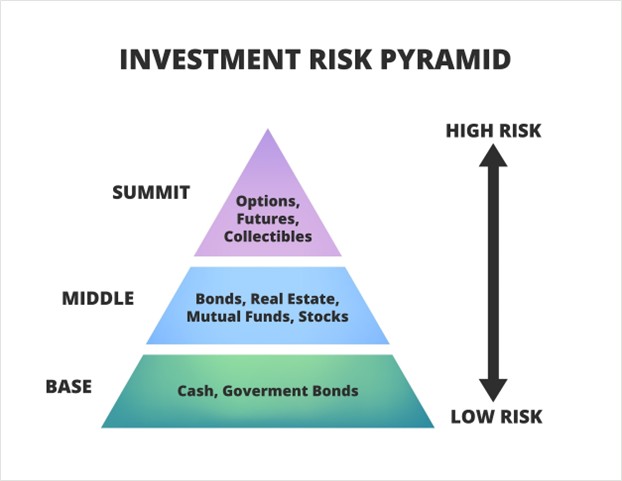
Risk Budget


The 11 Mutual Fund Categories That Matter in 2026

A strong mutual fund portfolio is not built by owning many funds but by owning the right categories for the right reasons.

1. Large Cap Funds – Portfolio Stability

  • Core equity exposure
  • Lower volatility relative to broader markets
  • Anchor for long-term portfolios

2. Flexi Cap Funds – Allocation Flexibility

  • Dynamic market-cap allocation
  • Suitable for uncertain market phases
  • Reduces timing risk

3. Multi Cap Funds – Balanced Equity Exposure

  • Mandated diversification across market caps
  • Reduces concentration risk

4. Large & Mid Cap Funds – Growth with Stability

  • Combines scale with earnings growth
  • Suitable for long-term investors seeking balance

5. Mid Cap Funds – Higher Growth, Higher Volatility

  • Long-term alpha potential
  • Requires patience and discipline
  • Not suitable for short horizons

6. Small Cap Funds – Satellite Allocations

  • High risk, high dispersion
  • Best used sparingly
  • Requires strong behavioural tolerance

7. Focused Funds – High Conviction Strategies

  • Concentrated portfolios
  • Higher tracking error
  • Suitable only as satellites

8. ELSS Funds – Tax-Efficient Equity Investing

  • Long-term wealth creation with tax benefits
  • Lock-in enforces discipline

9. Balanced Advantage Funds – Tactical Risk Management

  • Dynamic equity-debt allocation
  • Useful during volatile or sideways markets

10. Equity Savings Funds – Lower Volatility Equity

  • Equity participation with defensive characteristics
  • Suitable for conservative investors

11. Multi-Asset Allocation Funds – True Diversification

  • Exposure to equity, debt, and gold
  • Helps smooth portfolio volatility

Each category exists to solve a specific portfolio problem, not to outperform every year.


Why Mutual Fund Performance Alone Is Misleading

Past performance is visible.
Future risk is hidden.

Common Investor Mistakes

  • Owning multiple funds that behave the same way
  • Overexposure to a single market phase
  • Ignoring drawdowns until they occur
  • Reacting emotionally during corrections

The Playbook helps investors shift from return-chasing to outcome-engineering.


Investment Behaviour: The Most Underrated Asset Class

Most long-term underperformance is not due to bad funds but bad decisions.

How the Playbook Improves Behaviour

  • Clear allocation rules reduce anxiety
  • Defined roles prevent impulsive switches
  • Periodic review replaces constant monitoring
  • Structure replaces speculation

Markets reward investors who stay invested, not those who stay busy.


Who Should Follow This Mutual Fund Strategy?

This framework is ideal for:

  • Investors building long-term wealth
  • Families managing multi-goal portfolios
  • Professionals and HNIs seeking disciplined allocation
  • Advisors looking for a repeatable investment process

Whether you are starting fresh or reviewing an existing portfolio, the Playbook provides clarity without complexity.

Equity fund performance is typically evaluated against broad market indices such as NIFTY benchmarks over full market cycles.


Final Thoughts: Structure Is the Real Edge

Markets will fluctuate.
Narratives will change.
Predictions will fail.

But portfolios built on structure, risk management, and discipline compound quietly over time.

The Growthfiniti Wealth Mutual Fund Playbook 2026 is not about predicting markets it is about preparing portfolios.

DisclaimerGrowthfiniti Wealth Pvt Ltd is a SEBI-registered Portfolio Manager (INP000009418). The information provided is for educational purposes only and not investment advice. Market investments are subject to risk.


Indian Equity Investing 2026: 12 Valuable Data-Backed Truths Every Long-Term Investor Must Know (Frontier View Jan 2026)

Indian equity markets enter 2026 amid familiar investor emotions optimism, anxiety, and constant noise. Corrections, sectoral rotations, and global macro uncertainty dominate conversations. Yet, when examined through long-term data, a very different narrative emerges.

The January 2026 Growthfiniti Frontier View provides a rigorous, evidence-driven perspective on how Indian equities, asset classes, and portfolios have behaved across cycles and what that means for Indian equity investing in 2026.

This blog distils the most important insights for serious investors.

1. Indian Equities: Still the Best Wealth-Creation Engine

Over the past two decades, Indian equities have delivered ~16% CAGR, compounding capital nearly 28 -30x since 2003. No other mainstream asset class gold, debt, or global equities has matched this consistency in INR terms.

Key takeaway:
For Indian investors, equities are not optional they are foundational.


2. Active Funds vs Passive: Compounding Favors Skill

Actively managed equity funds have compounded at ~18% CAGR over the long term, materially outperforming Nifty 50 index funds, resulting in nearly 46–47x wealth creation over ~23 years

This gap may appear small annually but over decades, it becomes decisive.

Indian equity investing 2026 insight:
Passive works for market exposure. Active works for excess returns if selection discipline exists.


3. Mid & Small Caps: Higher Returns, Higher Responsibility

Since 2019, mid-cap and small-cap indices have outperformed large-caps meaningfully but with deeper drawdowns and sharper volatility.

  • Small-caps fall more during corrections
  • Recoveries are strong, but patience is mandatory
  • Wrong entry points magnify stress, not returns

Rule:
Mid and small caps reward discipline not excitement.


4. Volatility Is Normal And Temporary

Data shows that 10-20% corrections occur almost every year, yet markets finish positive most of the time.

Even after severe declines (2008, 2020), recoveries have been stronger than the falls

Reframing volatility:
Volatility is the price of admission for long-term equity returns.


5. Longer Horizons = Higher Probability of Gains

Holding period analysis reveals:

  • 1-year equity returns can be negative
  • 3-year periods dramatically improve odds
  • 5-10 year horizons show near-certainty of positive outcomes

Indian equity investing 2026 principle:
Time reduces risk more effectively than diversification alone.


6. The True Cost of Missing the Best Days

If an investor missed just 50 best days over ~22 years, returns collapsed from ~15% CAGR to ~3% CAGR.

Ironically, the best days cluster around the worst days, when most investors panic and exit

Lesson:
You cannot selectively avoid bad days without also missing the best ones.


7. Market Corrections: Data Beats Fear

Historical analysis shows:

  • 5–10% corrections occur every ~1.5 years
  • 10–20% declines every ~3 years
  • 20% crashes roughly once every ~4-5 years

Yet every major fall was followed by a powerful recovery, often delivering 2–3x returns from the bottom


8. Gold: Stability, Not Alpha

Gold in INR has compounded at ~15% over long periods, aided by rupee depreciation. However:

  • Returns are cyclical
  • Drawdowns still occur
  • It works best as a portfolio stabiliser, not a return engine

Use gold for balance, not bravado.


9. International Equity: Diversify, Don’t Chase

US equities (S&P 500, Nasdaq) have outperformed emerging markets largely due to China’s prolonged underperformance.

For Indian investors, global equity exposure:

  • Improves diversification
  • Reduces country-specific risk
  • Should complement not replace Indian equities

10. Currency & Interest Rates: Lagging Indicators

Rupee depreciation has averaged ~2.7-2.8% annually over long periods. Data supports Uncovered Interest Rate Parity higher yield differentials coincide with faster INR depreciation.

Crucially:

  • Currency movements follow market cycles
  • They do not predict them

11. Asset Allocation: Science, Not Emotion

Correlation analysis shows negative or low correlation between equities, gold, debt, and global assets reducing portfolio volatility meaningfully.

Efficient Frontier analysis demonstrates:

  • Higher equity → higher return, higher volatility
  • Blended portfolios improve risk-adjusted outcomes

This is where real investing begins.


12. Indian Equity Investing 2026: What Matters Now

The data is unambiguous. Success in Indian equity investing 2026 will not come from:

  • Market timing
  • Chasing past winners
  • Reacting to headlines

It will come from:

  • Staying invested
  • Respecting asset allocation
  • Allowing compounding to work uninterrupted

Final Thought: The Silent Advantage

Markets reward patience, not prediction.
They reward discipline, not drama.
And they reward investors who stay invested long enough to let probabilities work in their favour.

Indian equity investing in 2026 is not about doing more it is about doing fewer things, consistently, over time.

DisclaimerGrowthfiniti Wealth Pvt Ltd is a SEBI-registered Portfolio Manager (INP000009418). The information provided is for educational purposes only and not investment advice. Market investments are subject to risk.

INDIA MARKET OUTLOOK 2026: 9 POWERFUL TRENDS INVESTORS SHOULD KNOW

(Growthfiniti Money Trends – December 2025 Review)

India market outlook 2026 – Growthfiniti Money Trends

1. India Market Outlook 2026: The Setup Investors Must Understand

India market outlook 2026 is not about one prediction. It is about recognising a regime shift.

December 2025 looked quiet on the index, but it revealed three structural truths:

  • India’s growth engine is intact
  • Valuations are elevated, reducing margin of safety
  • Domestic liquidity is now the real stabiliser of markets

This is the kind of setup where portfolio discipline outperforms market timing.


2. Growth Check: India’s Macro Base Remains Strong

India’s domestic fundamentals continue to surprise on the upside.

Industrial activity rebounded sharply, with IIP rising 6.7% YoY in Nov 2025, driven by manufacturing, metals, pharmaceuticals and automobiles. GDP remained robust, with India growing 8.2% YoY in Q2 FY26, and manufacturing expanding 9.1%.

However, leading indicators moderated:

  • Manufacturing PMI eased to 55.0
  • Services PMI softened to 58.0

This signals normalisation—not weakness.

Implication for India market outlook 2026: growth remains supportive, but returns will depend more on valuation discipline and sector selection.


3. Inflation Reality: Why CPI vs WPI Matters in 2026

Inflation is a key driver in any India market outlook 2026.

  • CPI inflation rose to 0.7% YoY, led by vegetables, protein and fuel
  • WPI inflation stayed negative, reflecting lower commodity pressure

This divergence is important. It suggests food-driven inflation, not demand overheating, making RBI’s stance more flexible than markets fear.


4. RBI and Liquidity: Rate Cuts Help, But Conditions Matter

The RBI delivered a 25 bps rate cut in Dec 2025 and introduced liquidity measures.

Yet, bond yields still rose during the month due to:

  • rupee weakness
  • tight banking liquidity
  • expectations of higher government borrowing

This is the “liquidity paradox”: policy easing does not automatically mean easier financial conditions if currency and supply pressures remain.

India market outlook 2026 takeaway: rate cuts help sentiment, but liquidity conditions will decide market breadth.


5. Equity Valuations: The Biggest Risk Is Paying Too Much

December reinforced a key truth: the biggest risk for 2026 is not volatility, it is starting valuations.

  • Largecap, midcap and smallcap valuations are above 3-year averages
  • Midcaps remain the most expensive segment

When valuations are elevated, markets don’t collapse immediately, but upside becomes selective and drawdowns punish weak quality.

Investor action: focus on earnings durability, cash flow, and balance sheet resilience.


6. Sector Rotation: Metals, Oil & Gas, Auto vs Realty and Healthcare

Sector performance in December showed clear rotation.

Outperformers:

  • Metals (China’s proactive fiscal stance, weaker dollar)
  • Oil & Gas and Auto

Laggards:

  • Realty, Healthcare, Pharma

This isn’t “risk-off.” It is internal leadership change, usually seen late in strong cycles.

India market outlook 2026 takeaway: portfolios should reflect rotation, not yesterday’s winners.


7. FII vs DII: Who Controls the Market Now

A defining shift in the India market outlook 2026 is market ownership.

  • FIIs were net sellers in equities (~₹22,600 crore in Dec)
  • Domestic institutions stayed strong buyers
  • SIP inflows were robust at ~₹29,445 crore with SIP AUM at ₹16.5 lakh crore

Domestic flows have changed market structure. Corrections are shorter, and recoveries are faster.

Action: don’t confuse FII selling with a broken market. Domestic liquidity is the stabiliser.


8. Global Cues: US Rates, China PMI, and Risk Appetite

Global markets moved unevenly:

  • Europe performed better than the US
  • Emerging markets mostly rose, India lagged marginally
  • US inflation eased to 2.7% YoY, supporting rate-cut expectations
  • China PMI moved back to 50.1, signalling expansion

India market outlook 2026 implication: India will still be influenced by global risk sentiment, but domestic flows reduce fragility.


9. Gold, Crude, Rupee: The Quiet Portfolio Signals

December offered three clear signals:

  • Brent crude fell amid oversupply concerns
  • Gold rose on geopolitics and global easing
  • The rupee weakened amid foreign outflows, with intervention cushioning the move

Gold’s rise is not just fear, it is a strategic hedge in an uncertain geopolitical and currency environment.


10. Portfolio Framework: How to Position for 2026

A practical India market outlook 2026 portfolio approach:

  1. Keep equity exposure, but reduce “valuation risk”
  2. Prefer quality cash flows over narrative stocks
  3. Use sector rotation thoughtfully (not aggressively)
  4. Keep duration exposure balanced in fixed income
  5. Maintain gold as insurance, not as a return engine

11. Key Takeaway: Discipline Will Beat Predictions

The most important conclusion from December 2025 is this:

India market outlook 2026 will reward process, not prediction.
In high-valuation markets, risk budgeting, diversification, and rebalancing matter more than bold calls.

External DoFollow Links:

DisclaimerGrowthfiniti Wealth Pvt Ltd is a SEBI-registered Portfolio Manager (INP000009418). The information provided is for educational purposes only and not investment advice. Market investments are subject to risk.
How Yield Differential Shapes Rupee, Returns & India–US Equity Cycles: A Technical Guide for HNIs, NRIs & CIOs

For over two decades, yield differential – the gap between India’s 10-year G-sec and the US 10-year Treasury, has been the single most important macro variable driving:

  • Rupee depreciation
  • Relative equity performance between India and the US
  • Currency-adjusted returns for NRIs
  • Capital allocation outcomes for global investors
  • Market cycles across 2003–2010, 2010–2020, and 2020–2025

The Growthfiniti Rupee, Rates & Returns report quantifies this relationship with clear historical phase analysis, powerful CAGR comparisons, and currency-adjusted returns. It shows how yield differential acts as the macro anchor connecting rates, currency, and market performance.

This article decodes the insights for sophisticated investors allocating across India and the US.

Why Yield Differential Matters

The report establishes a simple but powerful empirical truth:

When the yield differential widens → Rupee depreciates faster → US equities outperform.

When the yield differential narrows → Rupee stabilises → Indian equities outperform.

This relationship is visible in all three historical phases:

All figures sourced from the report.

The consistency of this pattern over 22 years is remarkable.


The Three Phases: A Complete Breakdown

Phase 1 (2003–2010): Yield Differential = 3.07% (Low)

  • Rupee appreciated slightly (–1.13% CAGR).
  • Nifty 500 delivered a stellar 29.73% CAGR.
  • S&P 500 returned just 5.21% CAGR (INR terms).
  • India massively outperformed.

This was a perfect alignment of growth + currency tailwind + valuation comfort.

Phase 2 (2010–2020): Yield Differential = 5.43% (High)

  • Rupee depreciated sharply at 5.43% CAGR.
  • Nifty 500 struggled at 3.16% CAGR.
  • S&P 500 delivered 15.47% CAGR, outperforming India.

This was a classical high-yield-differential regime → weak rupee → weak domestic equities.

Phase 3 (2020–2025): Yield Differential = 3.71% (Moderate)

  • Rupee depreciation slowed to 2.68%.
  • Nifty 500 delivered 28.11% CAGR.
  • S&P 500 delivered 26.27% CAGR.

A globally strong market regime where both India and US delivered high returns.


Why the Rupee Depreciates: The Structural Formula

The report explains that the rupee’s long-term depreciation (~3% annually) is driven primarily by:

Inflation differential

Interest rate differential (yield differential)

Current account balance

India’s fiscal position

Capital flows & productivity

This is shown in the yield differential vs INR depreciation charts on Page 2.

High yield differential → Faster INR depreciation
Low yield differential → Lower INR depreciation


Equity–Currency Interaction: The Double Effect

The report highlights two critical scenarios:

When the rupee depreciates sharply:

  • Reflects economic stress
  • Domestic equities underperform
  • NRIs face a double penalty
    • weak equity returns
    • currency losses

When the rupee depreciates slowly or appreciates:

  • Macro environment is healthier
  • Equity markets outperform
  • FX drag is limited
  • NRIs earn higher USD-adjusted returns

This is detailed on Page 3.


Implications for NRIs

NRIs face currency translation risk, making yield differential a decisive factor:

If yield differential is falling → NRIs should allocate MORE to India.

If yield differential is rising → Increase US allocation + hedge INR risk.

The last 5 years (2020–2025) have been favourable because:

  • Indian growth is high
  • US inflation is elevated
  • Yield differential is moderate
  • Rupee depreciation is contained

Hence NRIs have benefited significantly.


Implications for HNIs & CIOs

For sophisticated allocators, yield differential serves as:

A cross-asset signal

Aligns FX, rates, and equity cycles.

A hedging indicator

High differentials → hedge INR exposure.

A tactical allocation guide

Signals when to tilt towards India vs US.

A portfolio risk management tool

FX-adjusted returns become predictable in each regime.

A cycle-turning indicator

Helps CIOs anticipate when the rupee will stabilise or weaken.


India vs US: Who Wins in Each Regime

Based on the report:

This matches all three historical phases.
Charts on Page 3 visually depict this.


Present (2025) & Forward Outlook (2026–2030)

As per Page 4 of the report:

Today’s environment shows:

  • Yield differential is significantly lower
  • India’s GDP growth is 7–8%
  • Inflation is contained
  • Fiscal deficit manageable
  • CAD moderate
  • Forex reserves strong

Meanwhile the US faces:

  • High debt-to-GDP
  • Elevated inflation
  • Slowing growth

This is structurally similar to Phase 1 (2003–2010).Forward Outlook

→ Higher probability of Indian equity outperformance
→ Lower probability of high INR depreciation
→ Long-term cycle favourable for India allocation


Portfolio Strategy for Global Allocators (HNI, NRI, CIO)

If yield differential stays moderate:

✔ Overweight India (equities + PMS + midcap flexicap)
✔ Underweight US duration
✔ Maintain global index exposure for diversification

If yield differential rises again (unlikely near-term):

✔ Increase US equity weight
✔ Consider INR hedging
✔ Reduce midcap/smallcap risk

If yield differential falls further:

✔ Add to India aggressively
✔ Favour domestic cyclicals, banks, manufacturing
✔ NRIs can maximise USD-adjusted alpha


Final Takeaway

Yield differential is the macro compass connecting currency, equity returns, and cross-border performance. For HNIs, NRIs, CIOs, and allocators, understanding this single variable provides:

  • Predictability of rupee trends
  • Clarity on India vs US equity cycles
  • Visibility on currency-adjusted returns
  • Confidence in long-term global allocation decisions

And as current data shows, India is positioned in a favourable low-to-moderate yield differential regime, similar to the country’s strongest historical periods.

DisclaimerGrowthfiniti Wealth Pvt Ltd is a SEBI-registered Portfolio Manager (INP000009418). The information provided is for educational purposes only and not investment advice. Market investments are subject to risk.

SIP Inflows Hit a Record ₹29,529 Crore: What India’s New Investing Wave Means for Your Portfolio

SIP inflows

India’s retail investors just made history.

According to AMFI data highlighted in the Growthfiniti Money Trends – November 2025 Report, monthly SIP inflows hit a record ₹29,529 crore in October 2025, with SIP AUM climbing to ₹16.25 lakh crore, and nearly 9.88 crore SIP accounts active across the country.

This milestone is more than just a statistic it marks a structural shift in India’s wealth-building behaviour, transforming how markets behave and how portfolios should be constructed.

This blog breaks down the trend in a way that is:

  • Technically insightful for HNIs, advisors & family offices, and
  • Simple and actionable for retail investors

Let’s decode this historic moment.

What Record SIP Inflows Signal About Indian Investors

The Money Trends report shows SIP inflows have moved in one direction for nearly two years up. Retail investors are no longer passive savers; they are active equity participants.

This shift signals:

  • Long-term confidence in India’s economic story
  • Adoption of disciplined investing even during volatile months
  • Financialisation of household wealth beyond gold and real estate
  • Maturity in investor behaviour, with rupee-cost averaging becoming mainstream

India is now one of the strongest retail-driven equity markets globally, powered not by foreign flows but by consistent domestic investing.


Why SIP Inflows Are Surging: The Real Drivers

1. Macroeconomic Strength

India’s GDP grew 8.2% YoY in Q2 FY26, supported by strong manufacturing expansion.
Strong growth → stronger corporate earnings → stronger market participation.

2. Inflation at a Decadal Low

CPI dropped sharply to 0.25% in October 2025, easing household budgets and freeing income for investing.

3. Digital Ecosystem

UPI, e-KYC, broker apps, and easy onboarding have made SIP investing frictionless.

4. Mindset Shift

Investors now understand:

  • Timing the market doesn’t work
  • Discipline beats emotion
  • Compounding works best with automation

5. Mutual Fund Industry Trust

57 consecutive months of equity buying by MFs (except Apr 2023 & Aug 2022) signals strong AMC confidence.


How Rising SIP Inflows Influence Market Behaviour

Record SIP inflows create predictable, steady liquidity.

For markets, this means:

  • Equity floors become stronger
  • Corrections get bought quickly
  • Volatility reduces
  • Market cycles lengthen

Think of ₹1,000 crore/day entering the market through SIPs it becomes a permanent liquidity engine, independent of FII behaviour.


Impact on Large-Cap, Mid-Cap & Small-Cap Segments

SIP flows influence different segments differently.

Large Caps

  • Benefit from steady DII & MF buying
  • Offer stability amid FII outflows
  • Are becoming the preferred SIP category for risk-adjusted returns

Mid & Small Caps

  • Receive disproportionate SIP flows
  • Have delivered strong returns over 18–24 months
  • But stretching valuations require caution
  • SIPs continue to bring liquidity even in corrections

For HNIs, the takeaway is clear:
→ Use SIPs for mid/small caps only within asset-allocation limits.


FII Outflows vs Domestic SIP Strength

In November 2025:

  • FIIs sold ₹3,765 crore in equities
  • DIIs bought ₹77,084 crore

This is a dramatic inversion of India’s old market structure.

Earlier:
FII flows drove Nifty.

Now:
SIP inflows drive Nifty.

This is healthy, stable, and reduces India’s vulnerability to global risk-off events.


What This Means for Mutual Fund Investors

For retail investors

  • SIPs remain the best vehicle for long-term wealth creation
  • Volatility becomes your friend due to rupee-cost averaging
  • Asset allocation matters more than picking the “best fund”

For HNIs & Ultra-HNIs

  • SIPs are no longer just a retail product
  • They are a strategic liquidity tool
  • Ideal for diversifying PMS, direct equity, and AIF-heavy portfolios
  • Combine SIPs with tactical portfolios for optimisation

For advisors and MF distributors

  • The SIP engine is now your strongest retention tool
  • Stickiness of flows will rise
  • Premium clients prefer model portfolios & risk-based asset allocation, not individual fund picking

Growthfiniti’s Guidance: How Should You Allocate Now?

1. Continue SIPs Relentlessly

The trend is structural, not cyclical.

2. Tilt Towards Large-Cap & Flexi-Cap Funds

Given elevated mid/small-cap valuations, flexi-cap and large-cap SIPs offer better risk-reward.

3. Keep Mid/Small-Cap SIPs – But With Guardrails

Don’t chase past returns. Stick to:

  • 10–20% midcap exposure
  • 5–10% smallcap exposure

4. Maintain Debt Allocation

With 10-year G-sec yields stabilising around 6.8%, pockets of opportunity exist.

5. Global Allocation for HNIs

US inflation cooling (3.0%) and moderating PMI create opportunities for global diversification.


Final Takeaway

The record ₹29,529 crore SIP inflow marks a turning point in India’s investment culture.

It tells us that:

  • Indian investors are becoming long-term, disciplined, and confident.
  • Domestic flows now anchor the market.
  • Mutual funds – not FIIs – are shaping price behaviour.
  • SIPs are now a permanent part of India’s wealth ecosystem.

Whether you’re a retail investor starting with ₹2,000/month or an HNI running a ₹2 crore/year SIP allocation, the message is the same:

Stay consistent. Stay allocated. Stay invested.

India’s wealth creation wave has only just begun.

Download Money Trends November…

DisclaimerGrowthfiniti Wealth Pvt Ltd is a SEBI-registered Portfolio Manager (INP000009418). The information provided is for educational purposes only and not investment advice. Market investments are subject to risk.

Frontier View – November 2025

The report highlights that equities remain the best-performing asset class over long horizons, with Indian equities delivering ~16% CAGR since 2003 and U.S. equities performing even stronger. Actively managed funds have outperformed index funds over long periods, compounding ~46x since 2003.

Midcaps and smallcaps have significantly outperformed large-caps since 2019 but also show deeper drawdowns during corrections. The data reinforces that staying invested improves outcomes the probability of positive returns reaches 100% over 10–15 year periods.

The report also shows that market corrections are frequent but recoveries are consistently strong, and missing even a handful of the best days dramatically reduces returns, making market timing ineffective.

Gold remains a reliable long-term inflation hedge, driven partly by rupee depreciation. U.S. markets (S&P 500 and Nasdaq 100) continue to outperform emerging markets, with China being a drag on EM performance.

Currency analysis indicates that INR depreciation aligns with interest rate differentials (UIP theory). The report also emphasizes asset allocation benefits, showing how combining negatively correlated assets (equity, debt, gold) reduces volatility and improves portfolio efficiency.

SIP analysis reveals no meaningful difference across SIP dates, and monthly SIPs remain optimal.

The macro section highlights India’s resilience GST collections, power consumption, PMIs, and inflation trends point to a steady economic backdrop in late 2025.

DisclaimerGrowthfiniti Wealth Pvt Ltd is a SEBI-registered Portfolio Manager (INP000009418). The information provided is for educational purposes only and not investment advice. Market investments are subject to risk.

India Economic Outlook 2025: The Powerful Shift in Growth and Stability

India Economic Outlook 2025: The Powerful Shift in Growth and Stability

Introduction

The India Economic Outlook 2025 reflects a period of resilience and optimism. Despite global uncertainty, India continues to shine as one of the fastest-growing large economies. With GDP growth around 6.5%, inflation stabilizing near 1.5%, and strong foreign inflows, India’s macroeconomic landscape remains firmly positioned for long-term wealth creation.

India’s Growth Momentum Strengthens

India’s growth in 2025 is powered by strong domestic demand, manufacturing expansion, and robust tax collections. The Nifty 50 and Sensex delivered steady gains in October, with investor confidence underpinned by resilient earnings and improving margins.

Key highlights from the India Economic Outlook 2025:

  • GDP Growth (FY26 projection): 6.5%–6.7%
  • Industrial Production: Firm with a manufacturing push
  • Services Sector: Continues to dominate GDP share

The government’s continued focus on Make in India and infrastructure-led capex spending remains a strong tailwind.
Explore Growthfiniti PMS Strategies

Inflation and RBI Policy – A Balancing Act

Inflation hovered at 1.54% in October 2025, giving the RBI comfort to maintain the repo rate at 5.50%.
Short-term instruments like TREP (5.58%) and 91-day T-Bills (5.44%) suggest abundant liquidity.

As highlighted in the India Economic Outlook 2025, these indicators reflect:

  • A controlled price environment
  • Supportive credit growth
  • Stable yields across maturities

Bond yields on 10-year gilts stood near 6.53%, while corporate bonds saw moderate easing, signaling investor confidence in fiscal discipline.

The global landscape remains mixed:

  • United States: Growth near 3%, inflation cooling to 3%
  • China: Recovery aided by infrastructure and exports
  • Eurozone & U.K.: Growth stagnating amid policy tightening

Despite this divergence, the India Economic Outlook 2025 projects that India will continue to outperform peers, attracting global investors seeking both growth and stability.

IMF World Economic Outlook 2025 Report

Sector Performance – Value Takes the Lead

Sectors like metals, real estate, and capital goods led gains in October 2025, supported by strong credit offtake and government spending.
Meanwhile, IT and FMCG cooled after previous highs, while financials remained steady on the back of consistent loan growth.

The India Economic Outlook 2025 signals a broader rotation toward value and cyclical sectors, suggesting:

  • Earnings-driven market leadership
  • Continued infrastructure cycle
  • Strength in mid- and small-caps

The bond market in India showed moderate yield contraction across the curve:

  • 91-day T-Bill: 5.44%
  • 3-month CD: 6.03%
  • 1-year CP: 6.46%

The spread between corporate and government bonds widened slightly, but real yields near 5% make India one of the most attractive fixed-income destinations globally.

Read Growthfiniti Money Trends Report – September

Investment Outlook – What Lies Ahead

The India Economic Outlook 2025 underscores a crucial phase for investors.
As the global growth cycle slows, India’s consistent macro framework fiscal discipline, manufacturing push, and digital transformation will anchor growth.

Investors should:

  1. Maintain balanced exposure across equity and debt.
  2. Focus on quality midcaps and financials.
  3. Use volatility to build positions via SIPs and PMS portfolios.

At Growthfiniti Wealth, we follow the Growthfiniti Efficient Frontier (GEF) a research-driven, multi-asset allocation model using Black-Litterman overlays to optimize portfolios for risk-adjusted returns.

Conclusion

The India Economic Outlook 2025 remains positive, highlighting macro stability, contained inflation, and resilient markets. Amid global headwinds, India’s disciplined approach to growth offers investors a compelling long-term opportunity. At Growthfiniti, we continue to combine institutional-grade research, factor-based investing, and risk-budgeted portfolio construction to help investors stay ahead in this dynamic landscape.

Disclaimer: Growthfiniti Wealth Pvt Ltd is a SEBI-registered Portfolio Manager (INP000009418). The information provided is for educational purposes only and not investment advice. Market investments are subject to risk.